Why Balcony Repairs Don’t Last
Balcony waterproofing failures are one of the most common and frustrating issues in strata apartments. Water stains below balconies, damaged internal finishes, mould complaints, and repeated call-outs for balcony repairs are all signs that something deeper is wrong. In many cases, balcony repairs fail because they focus on surface symptoms rather than the true water entry pathway.
In NSW strata buildings, balconies are exposed to harsh weather, movement, and daily use, making them particularly vulnerable to leaks. The good news is that most balcony waterproofing failures are solvable when the cause is properly identified.
This article explains why balconies leak, what to look for, and how to scope balcony repairs correctly so they last.
Why Balconies Leak And Why Balcony Repairs Often Fail
Balconies are one of the most exposed parts of a building. They are subjected to wind-driven rain, UV exposure, thermal movement, and constant foot traffic. At the same time, they contain complex construction details such as thresholds, drainage outlets, membrane upturns, balustrade fixings, and slab edges.
In strata apartments, repairs are further complicated by live occupancy, access constraints, and the need to coordinate multiple lots. Because of this, many balcony repairs are rushed or simplified.
Common quick fixes include sealing door tracks, regrouting tiles, or applying patch membranes. These approaches may temporarily reduce visible leaks, but they rarely address the underlying defect. As a result, water finds another pathway, and the problem returns.
The 6 Most Common Failure Points
Here’s a quick snapshot of the six most common balcony waterproofing failure points we see in strata buildings. Use this table as a practical checklist to help identify likely causes of leaks, what to look for on site, and the common “quick fixes” that usually don’t address the root issue.
| # | Failure point | What it is / why it fails | Signs | Common mistake |
|---|---|---|---|---|
| 1 | Threshold and freeboard issues | The balcony threshold is a critical waterproofing detail. Freeboard is the vertical height between the finished balcony surface and the internal floor level. If it’s too low, water can enter the apartment during heavy rain or ponding events. | • Water damage at internal doorways
• Swollen floorboards or stained carpet near doors |
Sealing door tracks instead of addressing inadequate freeboard. Where freeboard is inadequate, effective balcony repairs often require a redesigned threshold detail, not sealant. |
| 2 | Poor falls and ponding water | Balconies must fall away from the building toward the drainage outlet. Poorly constructed falls (or settlement over time) can lead to ponding water. | • Standing water after rain
• Persistent damp smells |
Replacing tiles without correcting falls in the screed |
| 3 | Membrane failure and poor detailing | Often caused by inadequate detailing at corners, penetrations, and terminations. UV exposure and building movement can also degrade membranes over time. | • Leaks appearing away from obvious joints
• Moisture detected beneath tiles |
Installing new tiles over an aging or compromised membrane |
| 4 | Outlets and drainage | Drainage outlet leaks are a frequent cause of water ingress. Issues occur when membranes aren’t correctly integrated with outlets or when blockages cause water to back up. | • Leaks during heavy rain only
• Overflowing outlets |
Clearing blockages without checking membrane connections |
| 5 | Tiles and grout are not waterproofing | Tiles and grout are a wear layer only. Water can pass through them and travel within the screed layer underneath. | • Efflorescence or loose tiles
• Ongoing leaks despite regrouting |
Treating grout as a waterproof barrier |
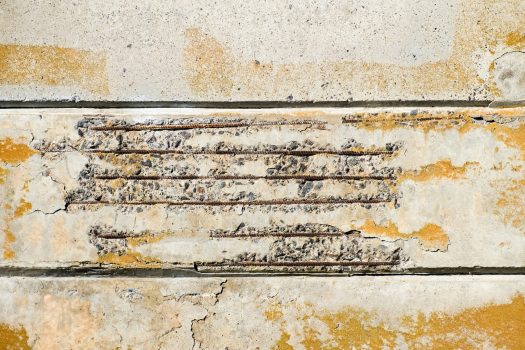
| 6 | Balustrade and façade interfaces | Balustrade posts, slab edges, and façade interfaces are high-risk. Penetrations through the membrane can allow water to track into the slab, sometimes causing rust staining or concrete spalling. | • Rust marks at slab edges
• Cracking around balustrade bases |
Sealing visible joints without addressing concealed penetrations |
Before You Book Balcony Repairs: 60-Second Quick Checks
Before you spend money on balcony repairs, run through these quick questions:
-
Does the leak only show up during heavy rain?
-
Is there ponding water on the balcony after rain?
-
Is the damage concentrated at the doorway, or down at the slab edge?
-
Are planter boxes or balustrade posts involved?
-
Have previous balcony repairs already failed?
If you answered yes to any of the above, start with an investigation and a defined scope first. It’s the fastest way to avoid paying twice for a “patch” that doesn’t fix the real issue.
How A Proper Investigation Supports Successful Balcony Waterproofing Repair
A proper investigation identifies the actual balcony water ingress pathway rather than guessing. This typically includes visual inspection of thresholds, falls, outlets, and membrane terminations, along with moisture mapping to track how water is moving through the structure.
Where appropriate, controlled water testing may be used to confirm assumptions. Original drawings and maintenance history are also reviewed to understand how the balcony was constructed and altered over time. Trial openings are only undertaken when necessary to confirm concealed conditions.
Without this process, waterproofing balcony repairs remain vague, contractors price risk, and variations become inevitable. A remedial engineer balcony inspection provides defensible documentation, particularly important for Sydney strata apartments and NSW owners corporations.
Balcony Repairs Options: Localised Repair Vs Full Strip-Out
Not every leaking balcony requires a full rebuild. Right-sized balcony repairs depend on whether the failure is isolated or systemic.
Localised balcony repairs can be effective when the defect is clearly identified and limited to a specific detail, such as an outlet or balustrade penetration. In contrast, widespread membrane failure, poor falls, or multiple defects usually require full strip-out and reconstruction.
In many cases, balcony repairs lie in threshold or drainage upgrades rather than cosmetic finishes.
What To Include In A Tender Scope For Balcony Repairs
A clear, well-defined scope is essential to avoid variations and ensure comparable pricing. A robust balcony repair scope should include:
| Scope section | Include |
|---|---|
| Access and safety | • Scaffold or swing stage requirements
• Working hours and noise constraints |
| Demolition and make good | • Tile and screed removal
• Disposal and protection of adjacent areas |
| Falls and drainage | • Minimum falls requirements
• Outlet replacement or upgrade details |
| Waterproofing system | • Membrane type and installation standards
• Upturn heights, terminations, and penetrations |
| Threshold detailing | • Design intent for freeboard and door interfaces |
| Finishes | • Tile type, slip resistance, and movement joints |
| Quality assurance | • Inspection hold points before covering the membrane
• Flood testing where applicable |
| Documentation | • Photo records, warranties, and as-built drawings |
| Ongoing maintenance | • Outlet cleaning guidance
• Sealant inspection intervals |
This approach makes quotes transparent and reduces contractor risk pricing.