Who Is Responsible for Water Ingress in Strata Buildings?
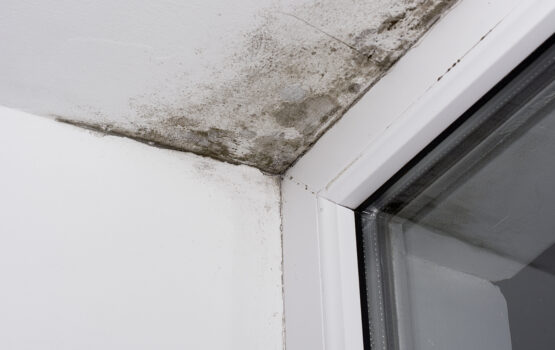
It starts small. A stain spreads across a ceiling. Paint bubbles near a window. Moisture creeps along a wall. Then comes the question that derails every strata meeting: who pays?
Water ingress is one of the most disputed issues in strata buildings and most of the conflict comes from a single misunderstanding. The damage you can see is rarely where the problem actually lives. That distinction sits at the centre of nearly every dispute over common property water ingress repairs.
The Mistake That Drives Most Disputes
Most people assume responsibility follows the damage. If water shows up in your lot, it must be your problem. If it appears on common property, that’s the owners corporation.
Buildings don’t work that way.
Water travels. It moves through slabs, cavities and junctions long before it becomes visible. By the time you see a stain, the defect could be metres away, sometimes on a completely different element of the building.
A few examples of how this plays out in strata water ingress cases:
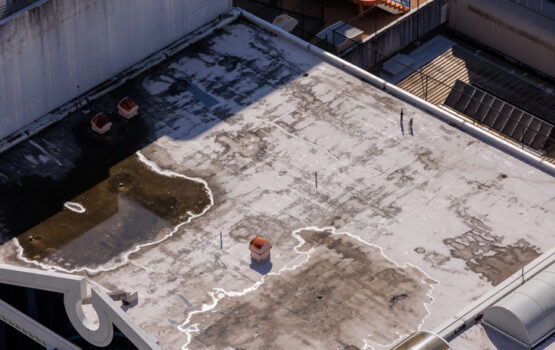
- A ceiling stain caused by failed balcony waterproofing above
- Moisture around a window reveal traced back to defective external sealing
- Bubbling internal paint caused by a failure at an external wall junction
Each of these looks like an internal problem. None of them are.
The damage you can see is rarely where the problem actually lives.
Start With the Documents, Not Assumptions
Owners corporation repair responsibility is defined by documentation, not intuition. Before any conversation about cost or blame, the right documents need to be on the table.
Documents to review before any water ingress dispute:
- The strata plan
- Registered by-laws
- Any common property rights by-laws
- The adopted common property memorandum
These documents work together to define how responsibility is allocated within your scheme. Under the Strata Schemes Management Act 2015 (NSW), the general rule is that the owners corporation maintains common property, but exceptions are common, particularly when balcony common property and window common property strata issues are involved.
How Balconies and Windows Are Usually Treated
Under most common property memorandums, certain balcony and window elements sit with the owners corporation, while owner modifications often shift responsibility back to the lot owner. The table below shows how this typically plays out:
| Element | Usually responsible |
| Original balcony tiles & waterproofing system | Owners corporation |
| Owner-installed decking over original tiles | Lot owner |
| Original windows and seals | Owners corporation |
| Owner-replaced windows | Lot owner |
| Structural components | Owners corporation |
| Structures added within the lot boundary | Lot owner |
| Building envelope (façade, flashings, junctions) | Owners corporation |
This is a guide, not a rule. Every scheme must still be assessed against its own strata plan and by-laws. Treat the memorandum as a starting point, not a final answer, particularly when balcony waterproofing common property issues are in dispute.
When Responsibility Shifts to the Lot Owner
Things change when an owner has modified the lot. Common triggers include decking installed over original balcony tiles, owner-replaced windows, or structures added within the lot boundary.
If those modifications contributed to the defect, the cost can shift to the owner who made them. Prior renovation approvals and specific by-laws can also transfer ongoing maintenance responsibility for particular elements.
This is why questions like “who pays for balcony repairs?” can’t be answered with a quick glance at the damage. The scheme’s documented history matters as much as the building itself.
Why These Disputes Get Complicated
Water rarely takes a direct path. A leaking balcony might enter the slab and affect the lot below. A “window leak” might actually be a façade failure. Internal damage might trace back to a flashing defect on the outside of the building.
In each case, the visible damage is the symptom. The defective element sits somewhere else. Skip the diagnosis and you end up paying for repairs that don’t fix anything, which leads to repeat failures and longer disputes.
Diagnose First, Allocate Second
Before assigning responsibility, proper diagnosis has to come first. The building needs to tell you where the problem actually is. A reliable process looks like this:
- Investigate to locate the actual source of ingress
- Map how water is travelling through the structure
- Confirm responsibility against the strata plan and by-laws
Only at the end of that process can responsibility for common property water ingress repairs be assigned with confidence.
Why an Engineering-Led Approach Matters
Water ingress isn’t only a legal question. It’s a building performance problem and it needs technical eyes on it before the lawyers and arguments arrive.
An engineering-led inspection separates symptoms from sources. It clarifies which elements are common property and which are lot-related based on how the building actually functions. That clarity makes repair scopes targeted, effective and far less likely to spark another dispute.
Legal advice still matters, especially when responsibility is contested. But the strongest legal position is one supported by clear technical findings, not assumptions.
Frequently Asked Questions
Are balconies always common property in NSW strata schemes?
No. Balcony elements are often treated as common property, but this depends on the strata plan and by-laws of each individual scheme.
Who is responsible for leaking windows in a strata building?
It depends on whether the issue relates to common property elements like original structures and seals, or to owner-installed modifications such as replacement windows.
If water damage appears inside my lot, does that mean I have to pay?
Not necessarily. The source of the defect may sit within common property, even when the visible damage is inside your lot.
What documents should be checked before deciding responsibility?
The strata plan, registered by-laws, common property rights by-laws, the adopted common property memorandum and any renovation approvals.
When should a strata scheme get an engineering inspection for water ingress?
As soon as the source of the leak is unclear or responsibility is disputed. Early diagnosis prevents repeat repairs and reduces the chance of a formal dispute.
Can an owners corporation refuse to investigate a water leak?
Generally no. Where common property is reasonably suspected as the source, the owners corporation has a duty to investigate and maintain common property. Refusing to investigate is often what turns a manageable repair into a formal dispute.
Who pays for the investigation itself?
In most cases, the owners corporation funds the initial investigation when common property is involved or suspected. If the investigation later confirms the defect sits inside a lot or relates to an owner modification, cost recovery may follow. The investigation usually proceeds first, so the source can be identified properly.
What happens if the defect spans both common property and a lot?
Responsibility is apportioned according to where each defective element actually sits. A clear engineering report makes this far easier to resolve, because the scope can be split rather than fought over.
How long can a water ingress issue be left before it becomes a bigger problem?
Longer than people think and that’s the danger. Concealed water damage often progresses inside slabs, cavities and structural elements before any visible symptom returns. By the time damage reappears, the repair scope is usually larger and more expensive.
The Bottom Line
Most strata water ingress disputes come back to a single distinction: where the damage appears versus where the defect actually exists.
Get that distinction right, combine it with a proper review of scheme documents and most disputes either resolve quickly or never start at all.
If you’re facing an unclear case involving balcony, window, or water ingress repairs, MJ Engineering Projects can provide an independent inspection, identify the likely defect pathway and prepare a practical scope of rectification, so the next step is the right one.