Water Ingress Explained
Water ingress is the unwanted entry of water into a building through its external envelope: the roof, walls, balconies, windows and facade that are meant to keep water out. When one of those barriers fails, water finds its way in, and in an apartment building, it rarely stops at the spot where it appears.
It is one of the most common building defects in Sydney, and the city’s climate is part of the reason. Long dry spells shrink and crack sealants and membranes, then heavy downpours drive water straight through the gaps. Add ageing waterproofing on balconies and flat roofs across thousands of strata buildings, and water ingress becomes close to inevitable without maintenance.
This article explains what water ingress is, how it differs from penetrating damp and water egress, the causes and signs to watch for, the damage it does if left, and how water leaks and water ingress are actually fixed. The short version: the stain on the ceiling is the symptom, and stopping the leak for good means finding the real entry point.
What Water Ingress Is
Water ingress simply means water getting into a building where it should not. The water comes from outside, through the building envelope, and shows up inside as damp, stains or pooling.
It helps to separate three terms that often get mixed up:
- Water ingress is water entering through the external fabric of the building, like a failed balcony membrane or a cracked wall.
- Penetrating damp is the damp and deterioration that water ingress causes once it is inside, soaking through walls and ceilings sideways or downwards.
- Water egress is the opposite direction, water escaping out of the building, usually from plumbing or drainage.
In practice, water ingress and penetrating damp travel together. Water gets in, then spreads through the walls and slab, which is why the damage often appears a long way from the actual entry point. It is also why rising damp, which moves up from the ground through masonry, is a separate problem with a different fix.
Common Causes and Signs of Water Ingress
Most water ingress traces back to a failed barrier somewhere in the building envelope.
Common causes
- Failed waterproofing membranes: the waterproofing membrane under balconies, planter boxes, bathrooms and flat roofs is the headline cause in apartments. Membranes have a service life, and once they crack or debond, water gets straight through.
- Failed sealant joints and flashing: perished sealant around windows and junctions, and damaged flashing on the roof, allowing water to run through.
- Cracks and blocked drainage: structural and shrinkage cracks in walls, render, brickwork, and concrete let water penetrate, while blocked gutters and drainage push water where it should not go.
Signs to watch for
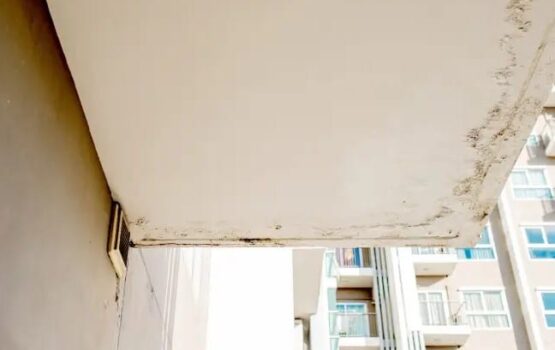
The early signs of water ingress are easy to miss: damp patches or water stains on walls and ceilings, peeling paint, bubbling render, a musty smell, and mould in corners or behind furniture. On balconies, efflorescence (white salt deposits) and lifting tiles are common tells. By the time you see staining, moisture has usually been moving through the structure for a while.
What Happens If Water Ingress Is Left Untreated
Water ingress does not fix itself, and the cost of ignoring it climbs steadily.
- Structural damage: persistent moisture corrodes the steel reinforcement inside concrete, causing concrete spalling (concrete cancer) that weakens slabs, balconies and columns. Timber framing can suffer fungal decay. This is structural damage, and it is expensive to repair.
- Mould and health effects: damp interiors grow mould, which can affect indoor air quality and the health of occupants, particularly anyone with asthma or allergies.
- Rising repair costs: a sealant or membrane repair caught early is minor. The same defect left for years can mean replacing membranes, repairing structural concrete and redecorating multiple apartments.
For an owners corporation, that progression is the real risk: a small, cheap repair turns into a major remedial project because the water ingress was patched or ignored.
How to Fix Water Leaks and Water Ingress
Fixing water ingress properly has three steps, and skipping the first is why so many leaks come back.
- Find the true entry point. The leak rarely enters where it appears. We use inspection and water testing, deliberately wetting areas in sequence, to trace where water actually gets in rather than guessing from the stain.
- Repair the cause, not the symptom. Depending on the source, that means renewing the waterproofing membrane, replacing perished sealant and flashing, crack injection into cracked concrete, or new waterproof coatings. The fix has to match the actual defect.
- Confirm and prevent. Once repaired, the area is retested, and ongoing maintenance, clearing drains, checking sealant, and scheduled membrane inspections keep it from returning.
This is where a remedial engineer earns their fee. A waterproofing contractor can apply a membrane, but diagnosing why a building leaks, especially when water travels through the structure, is an engineering problem. A remedial engineer diagnoses the cause, specifies the repair, and can oversee the work so it is done to that specification.
Water Ingress in Sydney Strata and Apartment Buildings
In Sydney’s apartment and strata buildings, water ingress shows up most often on balconies and in wet areas, where waterproofing membranes do the hardest work and age the fastest. Failed balcony membranes sit behind a large share of strata leak claims.
When a leak crosses between apartments or into common property, the question of who is responsible comes up quickly. In general terms, common property defects in NSW are usually the owners corporation’s responsibility, while issues inside a lot can fall to the owner, but the line depends on the strata plan, the by-laws and the specific defect. This is general information, not legal advice. For your situation, check with your strata manager and, where needed, a strata lawyer.
What an engineer adds is defensible documentation: an independent inspection and report that sets out the cause, the recommended repair and the scope, which an owners corporation can rely on to make a decision, fund the work and resolve a dispute. If you are dealing with a recurring leak, getting that diagnosis right is what stops it from coming back. A building condition assessment is often the place to start.
Frequently Asked Questions
What is water ingress?
Water ingress is unwanted water entering a building through its external envelope, such as the roof, walls, balconies or windows. It is different from penetrating damp, which is the damage water ingress causes once it is inside the structure, and from water egress, which is water escaping out of the building. In short, ingress is water getting in where it should not.
What causes water ingress in buildings?
The usual causes are failed waterproofing membranes on balconies, bathrooms and flat roofs, perished sealant and damaged flashing around windows and junctions, and cracks in walls, render and concrete. Blocked gutters and poor drainage make it worse by sending water where it should not go. In Sydney apartments, ageing balcony membranes are the most common single cause.
What are the signs of water ingress?
Watch for damp patches and water stains on walls and ceilings, peeling paint, bubbling render, a persistent musty smell, and mould in corners or behind furniture. On balconies, white salt deposits (efflorescence) and lifting tiles are common signs. Visible staining usually means moisture has been moving through the structure for some time, so it is worth acting early.
How do you fix water ingress and water leaks?
Properly, in three steps: find the true entry point through inspection and water testing, repair the actual cause (a new waterproofing membrane, fresh sealant and flashing, crack injection or waterproof coatings), then retest and maintain. The first step matters most, because water often enters a long way from where the stain appears, which is why a remedial engineer is brought in to diagnose rather than just patch.
Who is responsible for water ingress in a strata building?
In general terms, repairs to common property in a NSW strata scheme are usually the owners corporation’s responsibility, while problems inside a lot can be the owner’s, but it depends on the strata plan, the by-laws and the specific defect. This is general information, not legal advice. Confirm your situation with your strata manager and, if needed, a strata lawyer.
Contact us about a leak. If your building or strata scheme has water ingress that keeps coming back, MJ Engineering Projects can find the cause and scope a proper fix rather than another patch.
Contact us for an inspection. Call 1800 953 935 or email info@mjengineeringprojects.com.au.
About the Author
MJ Engineering Projects, Remedial Engineers, Sydney
MJ Engineering Projects is a Sydney remedial engineering firm working on building defects across residential, commercial and strata buildings. This article is general information about water ingress, not engineering or legal advice for a specific building. For your situation, get a site-specific assessment.