Most building leaks are repaired at the point where the water appears, which is rarely where it got in. MJ Engineering Projects provides water leak detection Sydney owners, corporations, strata managers and commercial property owners use when a leak keeps coming back, and nobody can agree on the cause.
This is an engineering investigation, not a plumbing call-out. We are remedial engineers, so our work is diagnosing building defects: tracing the water path through the structure, identifying the failed element, documenting it in a report you can act on, and specifying the rectification.





A plumber finds and fixes a failure in a pipe. That is the right call when the leak is in the plumbing, and it often is.
Our work starts where that ends. When the pipework tests sound, and water is still appearing, the source is usually the building itself: a failed membrane, a facade or window defect, a roof or drainage problem, or a poorly detailed junction between two elements. Diagnosing those requires an understanding of how the building was constructed and where its details are weak.
The other difference is what you get at the end: a written engineering opinion on cause, extent and responsibility, which is what a committee, an insurer, a lawyer or a tribunal actually needs.
Plumbing and hydraulic services. Failed supply pipework, corroded risers, leaking waste lines, faulty valves and defective connections in wet areas.
Waterproofing membrane failure. Bathrooms, laundries, balconies, planter boxes, podium slabs and basement tanking. Membranes typically fail at upturns, penetrations and terminations rather than in the middle of a field.
Balconies and terraces. Balcony leaks are one of the most common defects we investigate in Sydney apartment buildings. The usual causes are a failed or poorly terminated waterproofing membrane, an inadequate fall to the outlet, blocked or missing drainage, perished sealant and cracked or drummy tiling, and an unsealed threshold where the balcony meets the internal floor.
Facade and window ingress. Perished sealant, failed glazing gaskets, cracked render, defective sill and head flashings, and poor weatherproofing at the window-to-wall junction. Wind-driven rain is the usual trigger, which is why these leaks are intermittent and hard to reproduce.
Roofs and gutters. Ponding on flat roofs, failed flashings, undersized or blocked box gutters and overflowing rainwater outlets. Box gutter overflow can put a large volume of water inside a building quickly.
Planter boxes and landscaped areas. Planters sitting on a habitable slab are a recurring source, particularly where the drainage cell, root barrier or membrane has been compromised.
Inter-tenancy and inter-lot leaks. Water from one apartment appearing in another, through slab penetrations, shared wet area walls or common services. These are the ones that become disputes.
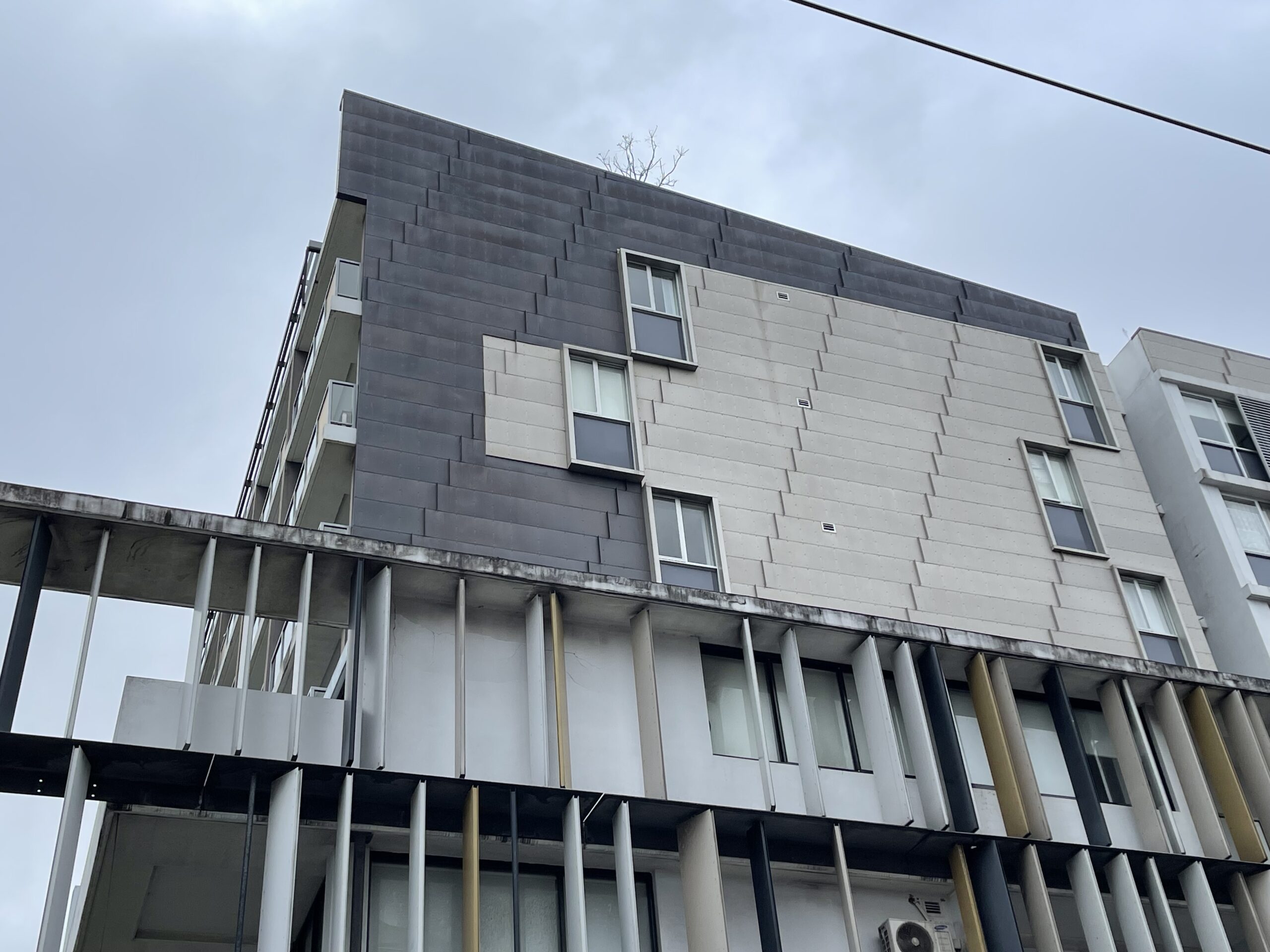
Where possible, a leak should be found without opening up finishes. Industry practice for non-destructive water leak detection in Sydney buildings includes:
Some of these are undertaken by specialist subcontractors engaged as part of an investigation rather than by the engineer directly. We confirm the testing proposed for your building before work begins, and we recommend only what the evidence justifies rather than a standard package.
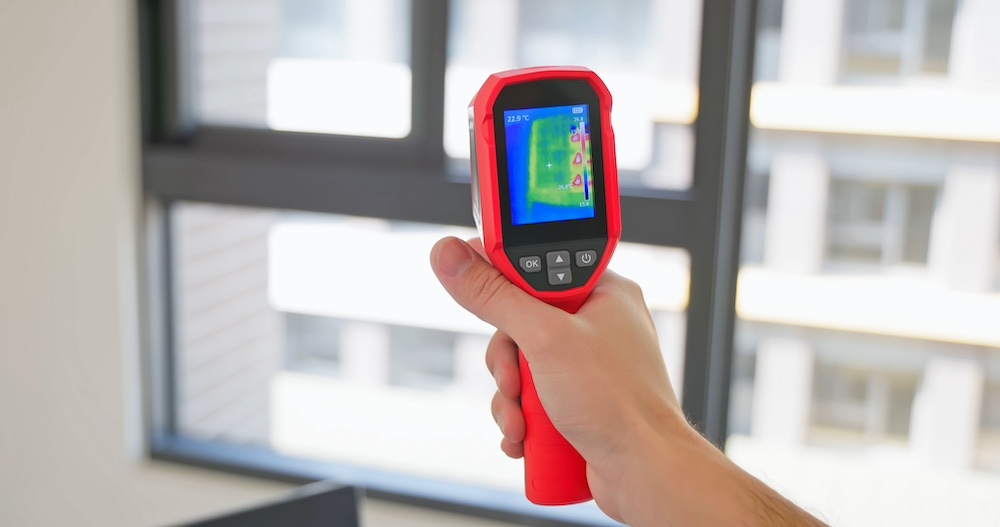
Water does not travel vertically. It runs along the top of a membrane, down the side of a service penetration, across a ceiling batten and out at the first available joint. A stain in a bedroom ceiling can originate from a balcony threshold two rooms away or a facade defect one level up.
Repairing at the symptom produces three predictable outcomes. The leak returns in the next heavy rain. Money is spent on rectification that was never going to work. And the building record now contains a failed repair, which makes the next claim or dispute harder to run.
Getting the diagnosis right is what separates a repair that holds from one that fails again in two years. Proper water leak detection also lets you scope the work, because once you know the mechanism, you know how many other apartments or balconies share the same defect.
In New South Wales, the owners corporation has a strict statutory duty to repair and maintain common property, and that duty does not depend on fault or on whether anyone has been negligent. Lot owners are responsible for what sits inside their lot boundary.
So the source of the leak effectively determines who pays for it. If the water is coming through a common property membrane, slab or facade, that is an owners corporation cost. If it is coming from a fixture or pipework within a lot, it usually is not. Where a leak has damaged another owner’s property, the answer to that question also drives the damage claim and any insurance response.
This is why an independent engineering investigation is worth doing early. Committees and lot owners can argue about a leak for a long time without evidence. A written report identifying the defect, the mechanism and the affected building element ends most of those arguments, and gives the strata manager something to put on a meeting agenda.
We provide leak detection services Sydney-wide, from apartment buildings and mixed-use towers in Sydney CBD, Surry Hills and Redfern, to commercial and industrial assets, to residential blocks around Maroubra, Eastgardens, Sutherland, Menai, Mount Colah and Mount Kuring-gai.
We assess dampness, staining and active leakage across the affected areas and the levels above, and review building records, previous reports and repair history.
We evaluate probable ingress points and how water is travelling through the structure, using non-destructive methods first.
You receive a written report setting out cause, extent, the building element responsible and our recommendations.
We prepare the specification and scope of works, and can run the tender process for the owners corporation.
We supervise the repair, review quality at hold points and confirm completion against the specification.

MJ Engineering Projects has more than 18 years in remedial engineering and has inspected and rectified defects on more than a thousand Sydney buildings. We are a NSW Fair Trading Registered Design Practitioner, listed on the National Engineering Register, members of Engineers Australia and the Strata Community Association NSW, and certified to ISO 9001, ISO 14001 and ISO 45001.
If a leak in your building keeps returning, or you need an independent opinion on where it is coming from and who is responsible, contact us.
MJ Engineering Projects provides water leak detection, defect investigations, remedial design and project support across Sydney and NSW. Whether the issue involves a commercial water leak, recurring internal moisture damage or broader building water leak problems, we help identify the source and determine an appropriate rectification pathway.
Identify the source of ceiling leaks and moisture ingress to help prevent ongoing internal damage and recurring water-related defects.
Investigate water leaking from window frames, joints and surrounding interfaces to help determine the cause and required rectification.
Assess wall leakage and water ingress through façades, masonry and wall interfaces to help identify the defect pathway and repair needs.
Investigate leaking balconies and balcony water ingress to help identify the cause and determine an appropriate repair pathway.
Contact MJ Engineering Projects to arrange an inspection and remedial waterproofing assessment.
Here are some key results we’ve delivered for Water Leak Detection Services.

With more than eighteen years of proven experience in remedial engineering, our firm has built a strong reputation for delivering reliable and long-lasting results. As registered design practitioners, we specialise in repairing building defects across a wide range of projects, from heritage façades that require delicate restoration to modern high-rise towers that demand technical precision.
Our structured project management approach, combined with thorough quality control processes, ensures every repair is handled with efficiency and care. We focus on minimising disruption, controlling costs and tailoring repair strategies to meet the unique requirements of each client.
This commitment to detail and excellence enables us to consistently provide durable, value-driven solutions that stand the test of time.
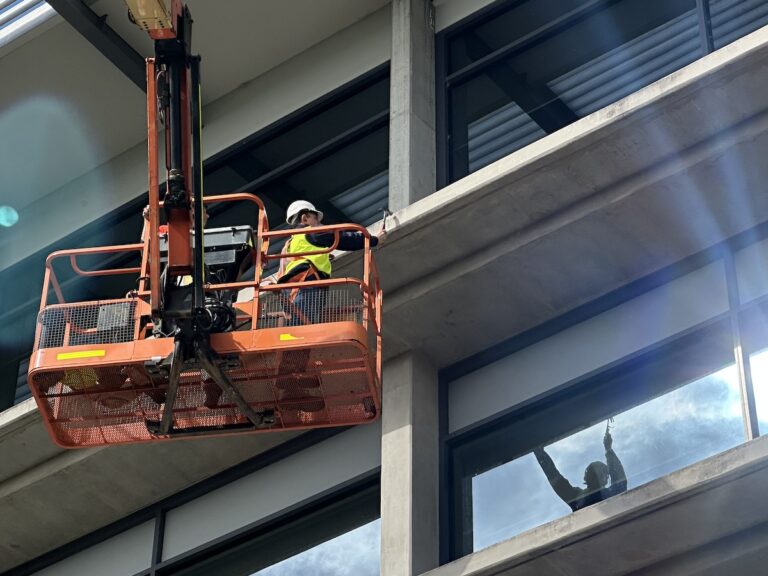
Our engineers bring extensive expertise in remedial engineering, supported by years of specialised experience and a detailed understanding of industry standards. We take pride in delivering tailored remediation strategies that address both visible and hidden defects across a wide range of building types.
By staying informed of changing regulations and compliance requirements, our team ensures every project achieves technical excellence and long-term durability. We also place a strong emphasis on sustainability, applying environmentally responsible practices and innovative methods wherever possible.
From diagnosing complex issues to implementing cost-effective repair programs, we are committed to providing clients with outcomes that are reliable, compliant and built for the future.
We have successfully completed inspections and remedial work on more than one thousand residential, commercial and industrial buildings across Sydney. This extensive experience allows us to identify and resolve issues with accuracy, from water ingress and façade deterioration to concrete spalling and structural concerns.
Each project benefits from a customised repair strategy designed to achieve durability, compliance and lasting performance. Our large and diverse portfolio equips us to anticipate challenges, optimise resources and streamline delivery to minimise site disruption.
With this proven track record, we are confident in managing projects of any scale or complexity, delivering solutions that are efficient, cost-effective and built to endure.
Our credentials reflect a strong commitment to professional standards, compliance, and continuous improvement. We maintain active involvement with leading industry bodies and hold recognized certifications and registrations, including ISO Certifications and NSW regulatory registrations.
View our capability statement for a full overview of our services, credentials and project experience.
If your property is affected by a water leak, moisture damage or recurring building leakage, MJ Engineering Projects can assist with inspection, diagnosis and practical next steps. We work across Sydney and NSW on water leak issues affecting commercial, strata and residential properties. Contact us to discuss the reported symptoms and the level of technical input required.
Key Concerns and Frequently Asked Questions About Leak Detection Services in Australia
Everything you need to know about MJ Engineering Projects. Can’t find the answer you’re looking for?
Chat With Our Team Now.
A plumber locates and repairs failures in pipework. A remedial engineer investigates the building itself: membranes, facades, windows, roofs, drainage and the junctions between them. If the plumbing has tested sound and water keeps appearing, the defect is usually in the building fabric, and diagnosing that needs an engineering assessment.
It depends on the source. The owners corporation has a strict duty to repair and maintain common property, so leaks originating in common property slabs, membranes, facades or common services are its responsibility. Leaks from fixtures or pipework inside a lot generally fall to the owner. An independent investigation is what settles the question.
Often, yes. Moisture mapping, thermal imaging, acoustic detection, tracer gas, dye and flood testing and CCTV drainage inspection can identify a source without opening up finishes. Some investigations still need limited exploratory opening to confirm a diagnosis, but that should be targeted by evidence rather than done speculatively.
Because the repair addressed where the water appeared rather than where it entered. Water travels along membranes, penetrations and framing before it becomes visible, so the stain is often well away from the defect. Until the actual entry point is identified and rectified, the leak returns with the next heavy rain.
An initial site inspection is usually completed in a single visit, but leaks driven by wind-driven rain or intermittent conditions can need repeat attendance or controlled testing to reproduce.
We collect your information to assess your enquiry, prepare your proposal, and manage our client relationships in accordance with our Privacy Policy.