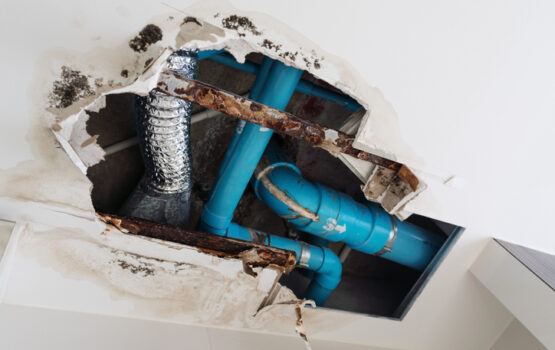
An expert witness is a specialist, such as a remedial or structural engineer, who gives a court or tribunal an independent opinion on technical questions in a dispute. In NSW, they must follow the Expert Witness Code of Conduct, which puts their duty to the court above their duty to whoever pays them.
So, what is an expert witness? In a building dispute, an expert witness is a person with specialised knowledge, such as a structural or remedial engineer, who gives an independent opinion to a court or tribunal on technical questions it cannot decide for itself. Is this balcony defective? What caused the water ingress? What will it cost to fix? The expert answers those questions in a written report and, if the matter goes to hearing, in evidence.
The word that matters in that definition is independent. An expert witness is engaged and paid by one party, but their duty is to the court, not to the party. That is written into the rules in NSW, and it changes how a good expert report reads. Below, where expert witnesses fit in NSW building disputes, the code of conduct they work under, what their reports contain, and how an engineering expert differs from a building consultant.
Where do expert witnesses fit in a NSW building dispute?
Most residential building defect disputes in NSW start in the Consumer and Commercial Division of the NSW Civil and Administrative Tribunal (NCAT), which hears home building claims up to a monetary limit. Larger or more complex matters go to the Supreme Court, often in its Technology and Construction List. Strata scheme development matters and some planning disputes sit with the Land and Environment Court.
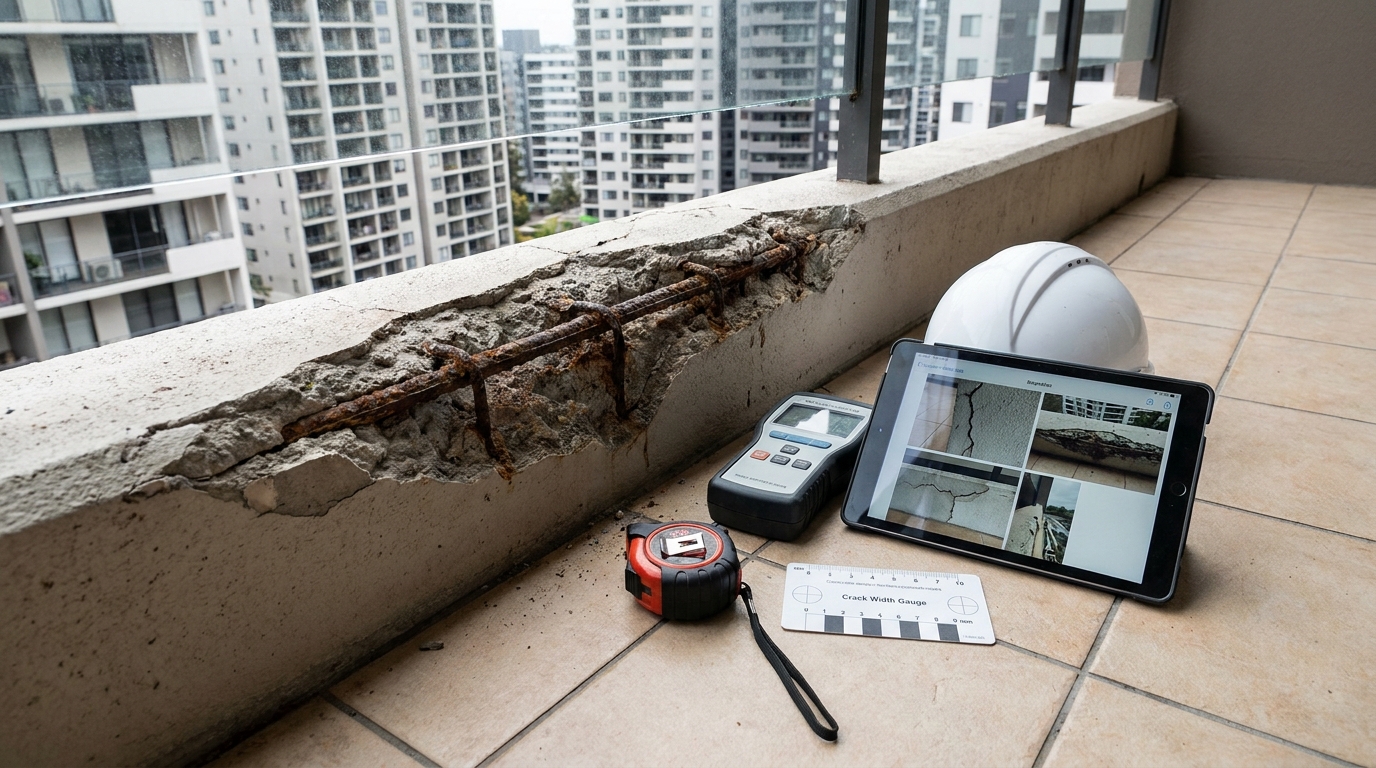
In each forum, the decision maker is a lawyer, not an engineer. They can read a contract and weigh a witness, but they cannot look at a spalled slab edge and say whether the cover to reinforcement met AS 3600 or whether the membrane upturn met the National Construction Code. That is the gap expert witnesses fill. Building Commission NSW’s 2025 research found 53% of recently registered apartment buildings had experienced a serious defect, and only 36% of those were reported to the regulator. Many of the rest end up in a dispute of some kind, and nearly every one turns on expert evidence.
The Expert Witness Code of Conduct and the duty to the court
In NSW courts, the rules are set out in Schedule 7 of the Uniform Civil Procedure Rules 2005, the Expert Witness Code of Conduct. NCAT applies the same code through its Procedural Direction 3 on expert evidence, and the Land and Environment Court applies it too. An expert who has not read and agreed to be bound by the code will usually find their report is not admitted.
Ask a barrister what an expert witness is for, and the answer is short: to help the court. The code says it in three parts. The expert’s overriding duty is to assist the court impartially on matters within their expertise. That duty overrides any obligation to the party who engaged them or is paying them. And the expert is not an advocate for a party.
In practice, this means an engineering expert engaged by an owners corporation will sometimes tell the owners corporation something it does not want to hear: that a crack is shrinkage rather than structural movement, or that a defect the committee blames on the builder is deferred maintenance. That is the job. An expert who shades every opinion towards the client is worth little once a competent barrister starts cross-examining, and tribunals notice.
What goes into an expert report?
The code also sets the shape of the report. Beyond the technical findings, an expert report must state the expert’s qualifications, the facts and assumptions the opinions rest on, the reasons for each opinion, the documents and materials relied on, any tests or investigations carried out and by whom, and whether any question falls outside the expert’s expertise or the opinion is not a concluded one. It ends with a statement that the expert has read the code and agrees to be bound by it.
For a building defect matter, the engineering content usually runs like this. A description of the building and the elements in question. What was inspected, when, and what access was available. Observations, with photographs and measurements. Testing where it was done: cover meter and moisture readings, core samples, membrane inspections. The engineer’s assessment of cause. An opinion on whether the work met the relevant standards and the contract. And a scope of rectification with a cost estimate, because the tribunal has to put a number on the damage.
Two habits separate a report that holds up from one that does not. Observation is kept separate from opinion, so the reader sees what the engineer saw before reading what they concluded. And limitations are stated plainly: what could not be inspected, what was assumed, what needs further testing.
Single experts, joint experts and conclaves
Each party can engage its own expert, and in most building disputes both sides do. The rules then push those experts together. The court or tribunal can direct the experts to confer, without the lawyers present, and produce a joint report setting out where they agree and where they disagree, with reasons. This meeting is usually called a conclave.

Conclaves work. Two engineers looking at the same photographs and test results often agree on most of the facts and narrow the dispute to two or three real points of difference, which shortens the hearing and the legal bill. Where they still disagree, the experts may give evidence concurrently, answering the same questions in turn so the tribunal can compare the reasoning side by side.
The alternative is a single expert. The parties agree on one, or the court appoints one, and that expert reports to everyone. It is cheaper and common in smaller NCAT matters and in strata disputes where both sides want the leak fixed more than they want to argue. The downside is that neither party gets to test the opinion against a second view.
Engineering expert or building consultant: what’s the difference?
Both give expert evidence in building disputes, and both can be excellent. The difference is the question they are qualified to answer. A building consultant can speak to workmanship, compliance with the National Construction Code, and the standard a competent builder should have met. An engineer can do that and also speak to structural adequacy, the mechanism of a failure, and the design of the rectification.
That matters for defects such as concrete spalling, slab deflection, cracking from footing movement, balustrade loading or facade fixings, where the tribunal needs to know not just that the work is defective but why it failed and what will make it sound. It also matters under the Design and Building Practitioners Act 2020, which imposes a duty of care on people carrying out construction work and requires regulated designs on apartment buildings to come from registered practitioners.
The practical rule: where the dispute is about finishes or workmanship generally, a building consultant may be enough. Where it involves waterproofing or structural elements, or the rectification needs to be designed, engage an engineer, ideally one who works in remedial engineering and has costed repairs of the same kind. Waterproofing and structure are both regulated design classes, so the rectification design must be prepared by a registered Design Practitioner.
How MJ Engineering Projects supports owners, strata managers and lawyers
MJ Engineering Projects has worked on building defects across Sydney since 2007, on more than a thousand buildings, and expert witness work is the dispute end of that experience. We prepare expert reports in accordance with the Expert Witness Code of Conduct for NCAT, Supreme Court and Land and Environment Court matters, attend conclaves and give concurrent evidence, and are members of the Resolution Institute.
For strata managers and committees, the useful part is often the conversation before any report is commissioned: whether the defect is likely to be inside the Home Building Act warranty period (six years for major defects, two for others), whether it is the builder’s problem or a maintenance issue, and what evidence to gather now before finishes are disturbed. For lawyers, it is an engineer who knows what a report has to contain to be admitted, writes in plain English, and will say so when the evidence does not support the client’s position.
Frequently Asked Questions
Who can be an expert witness in a NSW building dispute?
Anyone whose specialised knowledge, training or experience is relevant to the questions in dispute, and whom the court or tribunal accepts as qualified. For building defects, that usually means engineers, architects, building consultants and quantity surveyors. Qualification alone is not enough: the expert must agree to be bound by the Expert Witness Code of Conduct and give an opinion that is genuinely their own.
Can our existing defect report be used as expert evidence?
Sometimes, but usually not as it stands. A defect report written for a committee to plan repairs often lacks the qualifications statement, the assumptions, the reasons for each opinion and the code of conduct acknowledgement a tribunal expects. The underlying inspection is still valuable, and we can usually convert a well-documented report into a compliant expert report rather than starting again.
What does an engineering expert witness cost?
It depends on the size of the building, the number of defects, how much inspection and testing is needed and whether the matter goes to conclave and hearing. Report preparation is usually quoted as a fixed fee after an initial review of the documents, with conclave attendance and hearing days charged separately. Ask for the fee structure in writing before engaging anyone.
What happens if the expert witnesses disagree?
The tribunal or court will usually direct them to confer and produce a joint report narrowing the disagreement to specific points, each with reasons. At the hearing, the experts may give evidence concurrently so the decision maker can compare the reasoning directly. The tribunal then decides which opinion it accepts, and it tends to prefer the expert whose reasoning is clearest and whose independence is not in doubt.
If a building defect is heading towards a dispute and you need an engineer who can give independent expert evidence, contact MJ Engineering Projects on 1800 953 935.
About the Author
MJ Engineering Projects, Remedial Engineers, Sydney
MJ Engineering Projects is a Sydney remedial engineering firm working on building defects across residential, commercial and strata buildings. This article is general information about expert witnesses in building and construction disputes, not engineering or legal advice for a specific building or matter. For your situation, get a site-specific assessment.
Sources
References for statistics and claims cited in this article.
- Uniform Civil Procedure Rules 2005 (NSW), Schedule 7, Expert witness code of conduct: legislation.nsw.gov.au
- NSW Civil and Administrative Tribunal, Procedural Direction 3, Expert evidence: ncat.nsw.gov.au
- Land and Environment Court of NSW, Expert witness code of conduct and duties: lec.nsw.gov.au
- Building Commission NSW, Research on serious building defects in NSW strata communities (2025 findings: 53% of buildings with serious defects. 36% reported to the regulator): nsw.gov.au
- Building Commission NSW, How Building Commission NSW deals with building defect complaints (statutory warranty periods under the Home Building Act 1989): nsw.gov.au