Balconies leak because the waterproofing membrane, or more often the detail where that membrane stops, has failed. Waterproofing balcony areas properly is not about the flat middle of the slab, which rarely gives trouble. It is about the door threshold, the drainage outlet, the balustrade fixings and the edges, and those are the points that get compromised first.
Waterproofing is the most prevalent serious defect category in NSW strata buildings, present in 22 per cent of the strata buildings surveyed in the NSW Building Commission’s 2025 strata defects research. Balconies are a large share of that. If your ceiling below is staining, or your balcony tiles are drumming underfoot, the cause is usually already several years old.
This article explains what goes wrong and what a proper repair involves. Balcony waterproofing is structural work on common property in most apartment buildings, and getting it wrong costs more than getting it right.
Why does balcony waterproofing fail?
Most failures trace back to one of five things, and often several at once.
Detailing at junctions and terminations. Membranes rarely fail in the open field. They fail where they have to stop, turn or be pierced. Door thresholds that were never built with enough height between the finished tile level and the internal floor. Upturns behind the balustrade that were cut short or never turned up at all. Membrane taken to the edge of an outlet instead of dressed into it. Every one of these is a hole in an otherwise sound system.
Penetrations. Balustrade posts core-drilled through a completed membrane, awning fixings, light fittings, planter drains and services added years after handover. A fixing installed through a membrane without a properly sealed collar is a permanent leak path.
Falls and ponding. If the slab does not fall consistently to the outlet, water sits. Standing water finds the weakest detail and stays there long enough to get through. Ponding also shortens membrane life and drives efflorescence through tile joints.
Drainage. A single small outlet, no overflow, and a grate that blocks with leaves. Once the outlet is blocked, water backs up above the threshold height and enters the apartment.
Substrate preparation and workmanship. Membranes applied over dusty, damp or contaminated concrete, applied under the specified thickness, or covered before curing. Screed that debonds. Tile adhesive bedded straight onto a membrane that needed a bond breaker or a separating layer. None of this is visible after the tiler leaves.
Movement is the other quiet contributor. Concrete cracks, buildings shift, and a membrane with no capacity to bridge a moving crack will simply split along it.
Membrane types: liquid applied and sheet
Waterproofing balcony slabs and terraces relies on two broad membrane families, and there is no single correct answer. The right choice depends on the shape of the balcony, the number of penetrations, the substrate and how much the structure moves.
| Liquid applied membrane | Sheet membrane | |
| How it goes down | Rolled, brushed or sprayed in coats and cured on site | Prefabricated sheets bonded or loose laid, with lapped and welded joints |
| Strength | Continuous with no joints, follows complex shapes, easy around penetrations and upturns | Consistent factory thickness, less dependent on site conditions |
| Weakness | Thickness depends entirely on applicator control; sensitive to damp substrates and weather during cure | Joints and laps are the vulnerable points; harder around clustered penetrations |
| Typical fit | Balconies with several penetrations, tight upturns and irregular geometry | Larger, simpler terraces and podium areas |
| Reinforcement | Fabric or bandage reinforcement at corners, junctions and cracks | Reinforced sheet plus detailing tapes at changes of plane |
| Typical Service Life | Commonly quoted at 10-20 years under tiles for a polyurethane system, shorter for acrylic or cementitious products, and highly sensitive to applied thickness and ponding | Terminations remain the limiting factor |
| Warranty | Product warranties are typically 10-15 years, occasionally longer where a manufacturer-accredited applicator installs to a certified specification | Product warranties are typically 15-25 years, and full manufacturer-inspected system warranties are not readily available |
Both work and both fail if the detailing is wrong. The membrane specification is the easy part of the design, and the junction details are the part that decides whether the balcony still holds water in ten years.
Warranties and life expectancy
Quoted service life assumes a compliant substrate, correct falls, sound detailing and no penetrations added later. On a balcony that ponds water or picks up a balustrade fixing after handover, the figures above do not apply. Treat them as a comparison between systems, and confirm them against the data sheet for the product being proposed.
Three separate warranties get conflated:
The product or system warranty from the manufacturer covers the material only, and is conditional on an accredited applicator, the specified thickness, an approved substrate and compliant falls and terminations (miss one, and it is void).
The workmanship warranty from the contractor is where most claims actually land, because failures are usually installation rather than material.
Statutory warranties under the NSW Home Building Act 1989 run from completion: six years for major defects and two years otherwise, with waterproofing failure that allows water penetration generally treated as major.
Ask for the warranty documents before works start, and check what the conditions require of the installer and of the scheme.
The signs your balcony waterproofing has failed
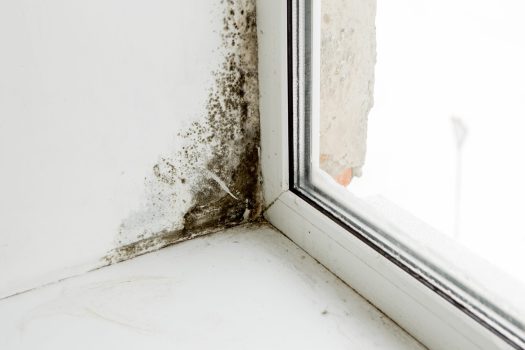
From inside, look for staining or blistering paint on the ceiling of the apartment below, damp at the head of the door or window below the balcony, salt deposits on soffits, and a musty smell in the room adjoining the balcony.
From outside, look for tiles that sound hollow when tapped, cracked or missing grout, efflorescence (white powdery salt) at tile joints or the slab edge, water sitting on the balcony after rain, rust staining at the slab edge, and any movement or corrosion at balustrade base plates.
Rust staining and spalling at the underside of the slab edge is the one to take seriously. It means water has reached the reinforcement and the problem has moved from a nuisance to structural deterioration. At that point you need a professional assessment, not a repair quote.
Waterproofing balcony repairs: patch or full membrane replacement?
This is the decision most owners corporations get stuck on, and the honest answer depends on the investigation, not on the budget.
|
Localised repair |
Full membrane replacement |
|
|
When it suits |
A single identified defect, such as one failed outlet or one penetration, with sound membrane elsewhere |
Widespread failure, unknown original detailing, no adequate falls, threshold height that cannot be corrected locally |
|
Scope |
Remove tiles in the affected zone, repair the detail, reinstate |
Strip tiles, screed and membrane back to slab, rectify falls, repair concrete, redetail thresholds, upturns, outlets and penetrations, reinstate |
|
Risk |
If the diagnosis is wrong, the leak continues, and the money is gone |
Higher upfront cost, longer disruption |
|
Life expectancy |
Depends on the condition of the surrounding membrane |
A complete, warrantable system with documented details |
Re-grouting, re-sealing perimeter joints and applying a surface coating over tiles are sometimes offered as a fix. They are not a substitute for a membrane. They can buy time on a balcony that is otherwise in good condition, but on a balcony with no upturn behind the balustrade or a threshold with no height, they change nothing.
The reality of doing it properly is that it is disruptive. A full strip-out means the balcony is out of use for weeks, there is noise and dust, scaffolding or an access system may be needed, and residents lose their outdoor space for the duration. Costs vary widely with balcony size, access, the number of balconies in the scheme and the condition of the concrete underneath.
Doing it once, properly, is almost always cheaper than three rounds of patching followed by a full replacement anyway.
What the standards require
External above-ground waterproofing in Australia is covered by AS 4654 Waterproofing membranes for external above-ground use, Part 1 (Materials) and Part 2 (Design and installation), both 2012 editions. Part 2 covers the design side that matters most when waterproofing balcony and terrace areas: falls, drainage, membrane terminations, upturn heights and the detailing at doors and windows. Internal wet areas sit under AS 3740:2021, Waterproofing of domestic wet areas, which is a separate standard and a common source of confusion when a bathroom sits behind a balcony door.
The National Construction Code sets the weatherproofing performance requirements these standards support. In NSW, the Design and Building Practitioners Act 2020 also brings waterproofing design and construction on Class 2 buildings into the regulated design framework, which means declared designs and registered practitioners for a lot of remedial balcony work.
When to get an engineer involved
Get a professional assessment before you scope any repair if there is water entering an apartment, visible concrete cancer or rust staining at the slab edge, movement or corrosion at balustrade fixings, or repeated failures after previous repairs.
The sequence that works for waterproofing balcony projects is investigation first, then design and specification, then tender, then supervision. Investigation might include moisture readings, flood testing, targeted opening up of the tiled surface, drainage testing and a review of the original construction documents. That produces a scope a contractor can actually price on a like-for-like basis, instead of four quotes describing four different jobs.
Our waterproofing repair and consulting services cover balconies, terraces, roofs, planters and basements, from diagnosis through to sign-off, and our balcony repairs work deals with the structural and balustrade issues that usually come with a failed membrane.
If you are scoping waterproofing balcony works across a scheme, or you have a leaking balcony and you are not confident the repair being proposed will hold, Contact Us for a site-specific assessment.
Frequently Asked Questions
Why does balcony waterproofing fail?
Failures start at junctions rather than in the open membrane. The usual causes are low door thresholds, missing or short upturns behind balustrades, penetrations drilled through a finished membrane, inadequate falls that let water pond, blocked or undersized outlets, and poor substrate preparation. Structural movement then opens cracks the membrane cannot bridge.
How long should balcony waterproofing last?
A correctly specified and installed system should perform for decades, but service life depends on the membrane type, exposure, drainage and whether penetrations have been added since installation. Balconies with ponding water, blocked outlets or later balustrade and awning fixings often fail much earlier, sometimes within a few years of handover.
What’s the difference between liquid-applied and sheet membranes?
They sit at different points on that range and should not be quoted as though they are interchangeable. A polyurethane liquid-applied system installed to the specified thickness is commonly quoted at around 10 to 20 years under tiles, because its performance depends heavily on the applicator achieving a consistent film thickness on site. A sheet membrane arrives at a factory-controlled thickness and is commonly quoted at 20 to 30 years, with its laps, terminations and upturns rather than the sheet itself as the limiting factor. Acrylic and cementitious products sit well below both and are not a substitute for either on a trafficable external balcony.
A localised repair carries the life expectancy of the surrounding membrane it is tied into, not the life expectancy of the new material. That is the difference between patching and full membrane replacement: only a full replacement restarts the clock, and only a full replacement can normally be covered by a manufacturer-backed system warranty.
Can you waterproof a balcony without removing the tiles?
Surface coatings and joint sealing applied over existing tiles can slow water entry on an otherwise sound balcony, but they do not replace a failed membrane and cannot correct falls, threshold height or upturn detailing. Where the underlying membrane or detailing has failed, tiles need to come up.
Who is responsible for balcony waterproofing in a strata building?
In most NSW strata schemes, the balcony slab and the waterproofing membrane are common property, making them the owners corporation’s responsibility, while some finishes may sit with the lot owner. Responsibility depends on the strata plan and by-laws for your building, so confirm it against your own scheme documents.
What Australian standard covers balcony waterproofing?
AS 4654 Waterproofing membranes for external above-ground use applies to balconies, terraces and other external above-ground areas. Part 1 covers materials and Part 2 covers design and installation, including falls, drainage and membrane terminations. Internal wet areas are covered separately by AS 3740:2021, which applies to domestic wet areas, and the National Construction Code sets the overarching weatherproofing requirements.
About the Author
MJ Engineering Projects, Remedial Engineers, Sydney
MJ Engineering Projects is a Sydney remedial engineering firm working on building defects across residential, commercial and strata buildings. This article is general information about construction condition surveys and dilapidation reporting, not engineering or legal advice for a specific building. For your situation, get a site-specific assessment.