- Most wall cracks are cosmetic: shrinkage and thermal movement in plaster, paint and render.
- Structural cracks come from movement or deterioration in the elements that carry load.
- Crack width is the main measure. Under 1 mm is very slight, 5 mm and over is moderate damage.
- Pattern, growth and rust staining matter as much as width, especially in concrete-framed buildings.
- Measure and date a crack before anyone patches it, and report cracks in common property to the strata manager.
Every building cracks. Plaster shrinks as it dries, render expands and contracts with the sun, and concrete keeps shrinking for years after it is poured. Most of those cracks are cosmetic and need nothing more than filling and paint. A smaller number are structural cracks in walls, the visible sign that a footing has moved, a slab is deflecting or the steel inside a concrete element is corroding.
The two can look alike on the day you notice them. What separates them is width, pattern, location and whether the crack is still moving. This guide covers how to read each of those, what the Australian crack width categories say, where structural cracking shows up in apartment buildings, and what an owners corporation should do next.
What is the difference between cosmetic and structural cracks?
Cosmetic cracks are confined to finishes: paint, plaster, plasterboard joints, cornices and render. They are caused by shrinkage, temperature change and minor movement between different materials, and they do not affect the strength or stability of the wall behind them. Hairline cracks at plasterboard joints, fine crazing in render and a gap where a cornice meets the ceiling are typical.
Structural cracks run through the material that carries load, or they are caused by movement of the structure itself. That includes brickwork and blockwork, concrete columns, beams and slabs, and the footings under them. A wall does not need to be load-bearing for the crack to matter. A non-load-bearing brick wall that cracks because the slab beneath it has moved is reporting a structural problem, even if the wall itself is only infill. If you are not sure which walls in a building carry load, our guide on how to identify load-bearing walls explains the signs.
How wide is too wide? Crack width categories
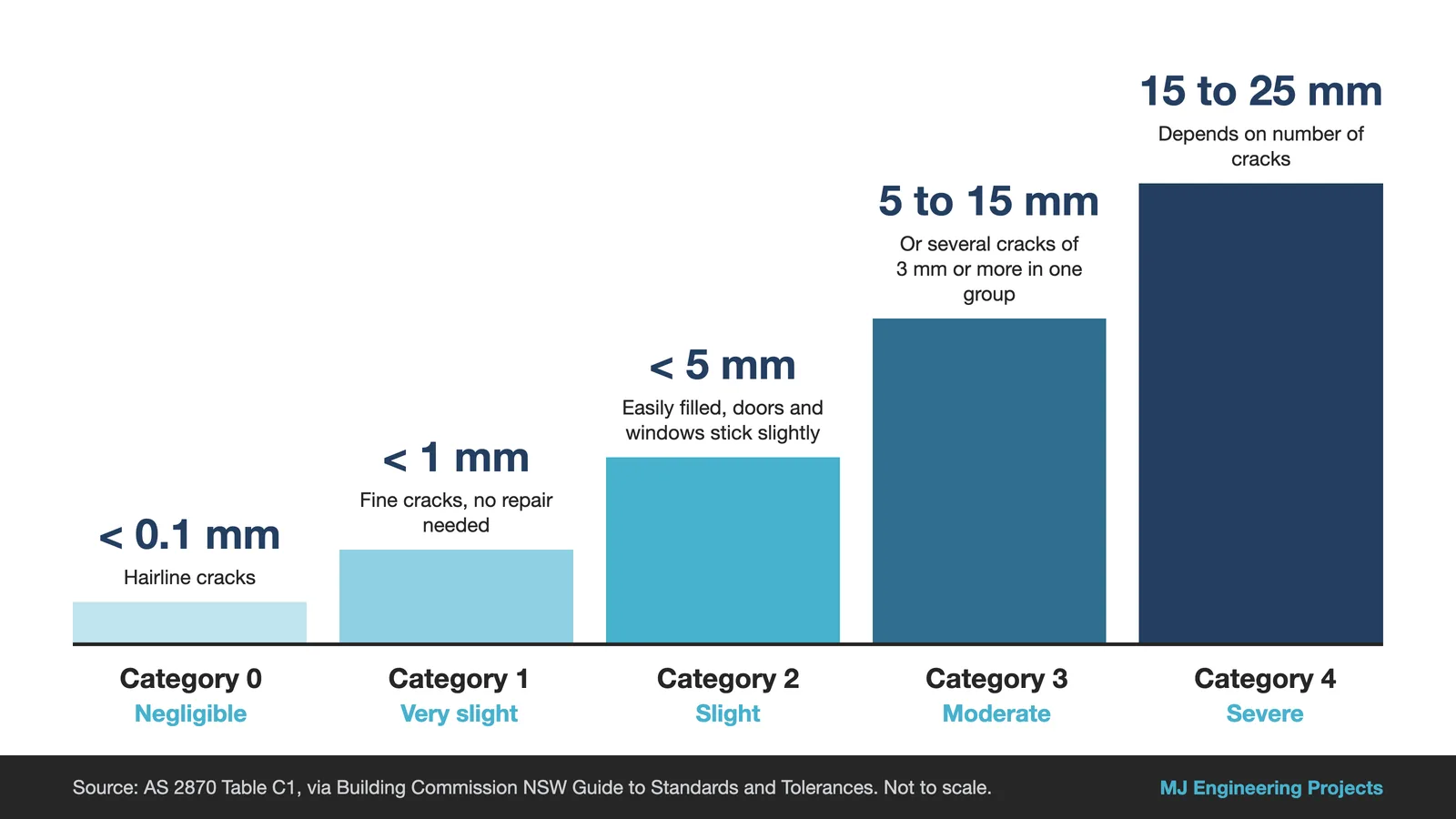
Australia’s residential footings standard, AS 2870, classifies damage to walls by crack width. Building Commission NSW reproduces the table in its Guide to Standards and Tolerances, and CSIRO uses it in its homeowner guide to foundation maintenance and footing performance.
| Category | Damage | Approximate crack width | What it typically looks like |
|---|---|---|---|
| 0 | Negligible | Under 0.1 mm | Hairline cracks |
| 1 | Very slight | Under 1 mm | Fine cracks that do not need repair |
| 2 | Slight | Under 5 mm | Noticeable but easily filled. Doors and windows stick slightly |
| 3 | Moderate | 5 to 15 mm, or several cracks of 3 mm or more in one group | Repairable, possibly with some wall replaced. Doors and windows stick, service pipes can fracture, weathertightness often impaired |
| 4 | Severe | 15 to 25 mm, depending on the number of cracks | Sections of wall broken out and replaced. Frames distort, walls lean or bulge, some loss of bearing in beams |
The fine print matters as much as the numbers.
- Plasterboard gets more allowance. Where cracking is in easily repaired plasterboard or similar framed partitions, the guide allows the width limits to be increased by 50 per cent for each category.
- Width is the main factor, not the only one. The category can be adjusted for serviceability, such as doors that no longer close, and for where in the building the crack sits and what that part of the building does.
- Category 2 is a watch-and-measure category. For new residential building work, the guide says Category 2 cracks should be monitored for 12 months. Category 3 or greater needs investigation, stabilisation, monitoring and rectification.
- Floors have their own scale. Concrete floor slabs use tighter widths, from under 0.3 mm (negligible) to 4 to 10 mm (severe), combined with how far the slab has moved out of level.
One caution on reading the table. It was written for damage caused by slab and footing movement, mostly in houses. It is a reliable guide to how much a wall has moved. It says much less about why, and in concrete-framed buildings a narrow crack can be more serious than a wide one.
What crack patterns tell you
The direction and shape of a crack point to the force that made it. These are the patterns an engineer reads first.
Hairline cracks in plaster and paint
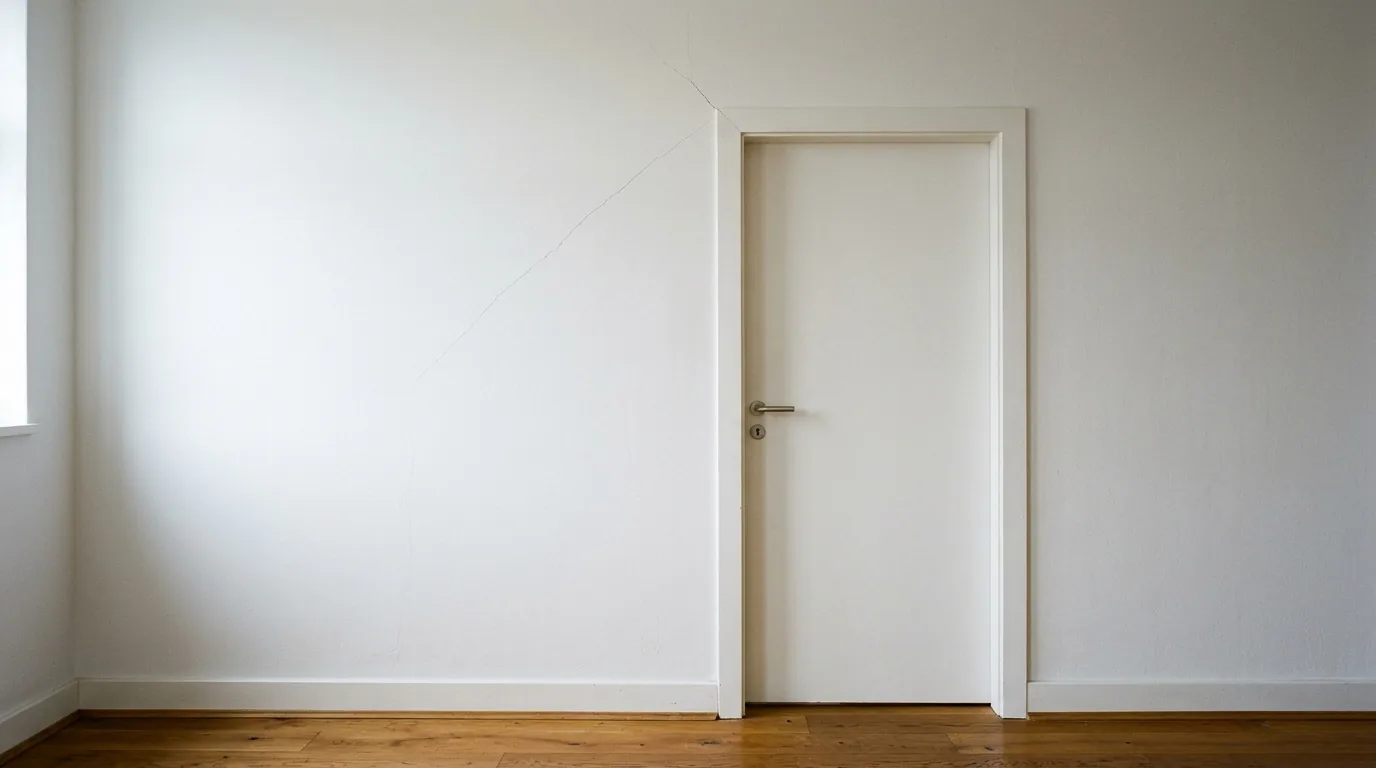
Fine, random or map-like cracks in plaster, and straight hairline cracks along plasterboard joints and cornices, are almost always shrinkage or minor seasonal movement. They are cosmetic cracks. Fill and repaint, and only revisit them if they reopen wider.
Stepped cracks in brickwork
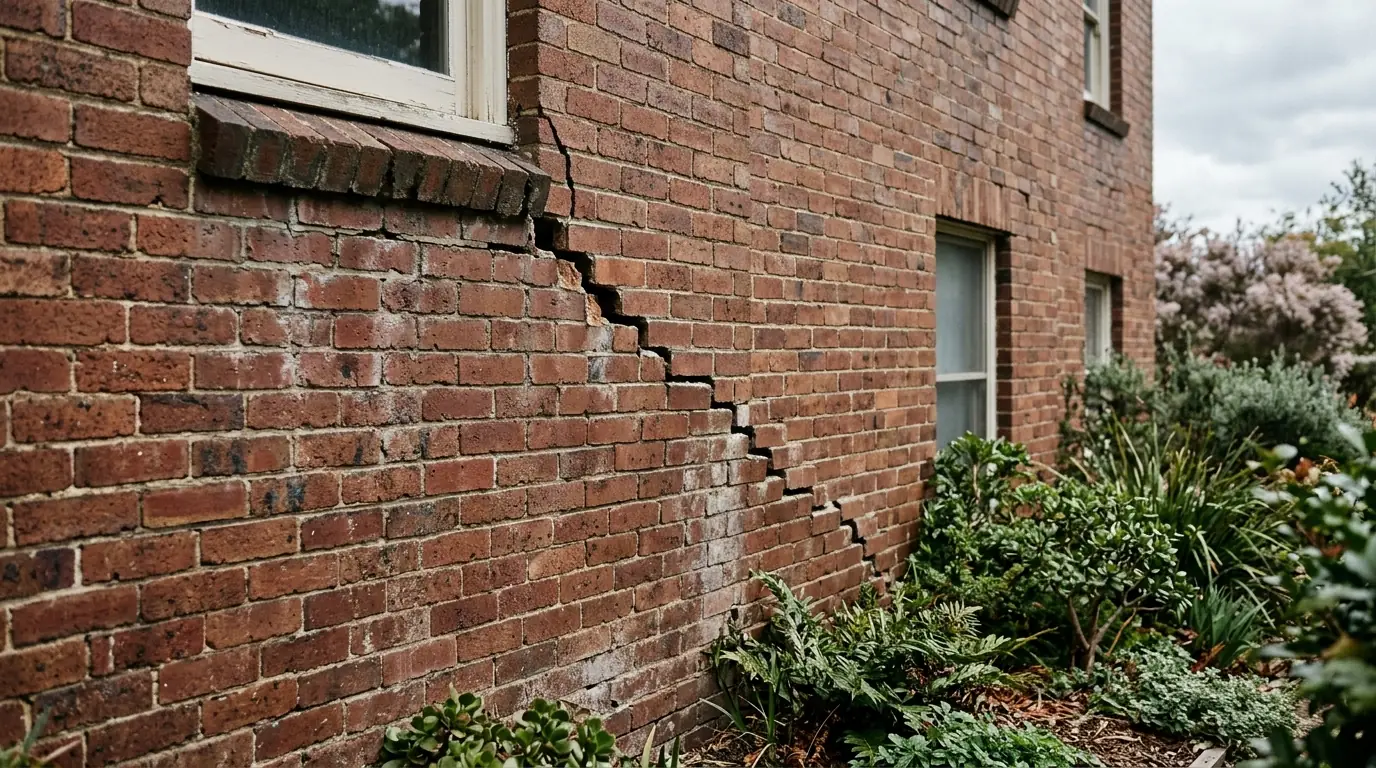
A crack that zig-zags through the mortar joints, stepping up or down across a brick wall, is the classic sign of differential movement: one part of the wall has settled or heaved relative to another. CSIRO identifies step cracking in the mortar beds, in the body of the wall or above and below doors and windows, as a typical symptom of footings losing support. Stepped cracks that widen towards the top or bottom of a wall are worth an engineer’s look regardless of width.
Diagonal cracks from the corners of windows and doors
Openings are weak points. Stress concentrates at the corners (engineers call them re-entrant corners), so any movement tends to show first as a diagonal crack running from the corner of a window, door or vent. A single fine diagonal crack at a window head in render is common and often stable. Several, or cracks that appear on matching corners of openings floor after floor, suggest the frame or the footings are moving.
Horizontal cracks
A long horizontal crack in a masonry wall can mean the wall is being pushed sideways, by soil pressure on a retaining wall or basement wall, or by expansion of corroding steel lintels and ties. In apartment buildings a horizontal crack at the junction between the top of a brick wall and the concrete slab above is often the slab deflecting or shrinking onto the wall. All three need diagnosis rather than filler.
Cracks that follow the steel, with rust staining
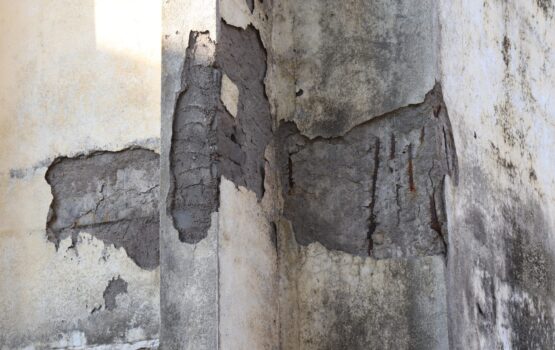
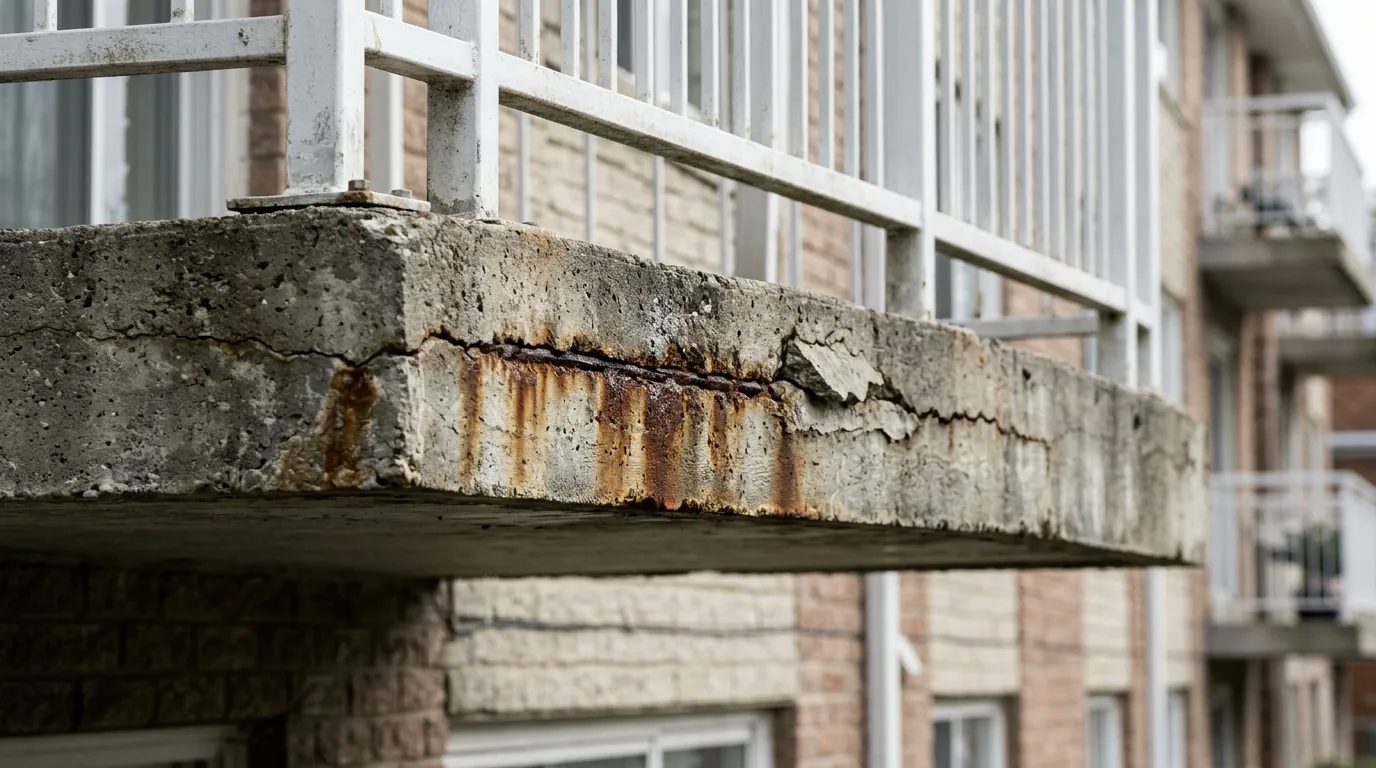
In concrete, a straight crack that runs along the line of a reinforcing bar, often with brown rust stains bleeding out of it, is the early stage of corrosion. The steel rusts, the rust takes up more space than the steel, and the expansion cracks the concrete and eventually pushes it off. This is concrete spalling, often called concrete cancer, and it is structural from the first crack, because the bar it is eating is what gives the beam, slab or column its strength. A hairline crack with rust staining on a balcony slab edge deserves more urgency than a 3 mm shrinkage crack in a plastered wall.
Where structural cracks show up in apartment buildings
Sydney strata buildings crack in different places, and for different reasons, from a house on reactive clay.
Concrete frame with brick infill. In many walk-ups and mid-rise blocks, a concrete frame of columns, beams and slabs carries the load, and brick walls fill the gaps. The brick and the concrete move differently. Concrete shrinks and creeps over time, while clay brick grows slightly as it takes up moisture. Where there is no movement joint to absorb the difference, cracks appear at the junction between brick and frame, at slab edges and at the corners of the building.
Brick veneer. In a brick veneer building, the frame inside carries the load and the outer brick skin mostly carries itself. CSIRO notes that the external masonry still behaves like the outer leaf of a full brick wall, so cracks in it are a reliable signal of movement even though the skin is not the main structure.
Render. Render hides the substrate. A crack in render can be shrinkage in the render alone, or it can be the brickwork, a corroding lintel or a slab edge cracking underneath. Drummy render around a crack, or cracks that line up with the floor levels, point to the second.
Balconies, slab edges and car park soffits. These are the most exposed concrete in a strata building and the usual starting point for corrosion-induced cracking. They are also where cracks are easiest to miss, because car park soffits and slab undersides are rarely inspected until concrete starts to fall.
When to worry about cracks in walls
Treat a crack as potentially structural, and get it assessed, if any of these apply:
- it is 5 mm or wider, or there is a group of cracks each 3 mm or wider
- it is getting longer or wider, or it reopens after being filled
- it steps through brickwork, or runs diagonally from the corners of openings on more than one level
- doors or windows have started sticking, or floors have started to slope
- it runs along a concrete element with rust staining, or the concrete around it sounds hollow or is lifting
- it is horizontal in a retaining, basement or masonry wall
- it appeared after nearby excavation, a leak, heavy rain or a long dry spell
How to monitor a crack before it is assessed
A single inspection shows a crack as it is on one day. A record over several weeks shows whether it is moving, which is often the deciding question. Before anyone fills or paints over it:
- Measure the width at its widest point with a crack width gauge or card, and note the length.
- Mark the ends with a fine pencil line and the date, so you can see if it grows.
- Photograph it square-on with a ruler or the gauge in shot, from the same spot each time.
- Repeat every few weeks, and after heavy rain or a hot, dry spell.
- Report it. In a strata building, external walls, slabs and structure are almost always common property, so cracks belong with the strata manager and the committee, not in a single lot owner’s maintenance list.
Engineers use tell-tale monitors and fixed reference points for the same purpose, but a dated photo log kept by the committee is valuable evidence when the engineer arrives.
What happens when an engineer assesses a crack
An engineer’s job is to work out what caused the crack, whether it is still moving, and what has to be fixed for it to stay closed. That starts with the crack and spreads outwards: the elements on either side, floor levels, drainage, the age and construction of the building and the history of earlier repairs. Where corrosion is suspected, cover meter readings and breakouts establish the condition of the steel. The result is a structural inspection report that separates cosmetic cracking from movement and sets out the repair.
The repair always deals with the cause first. Filling a crack that is still moving gives you a neat wall for a season and the same crack back the next. Our cracked wall assessment service covers that process from diagnosis through to oversight of the repair.
Two rules apply to strata buildings in NSW:
- Major defect warranty. Under the Home Building Act 1989, a defect in a load-bearing element essential to the stability of the building, including walls, floors, columns, beams and footings, can be a major defect, with a statutory warranty of six years from completion. If a newer building is developing structural cracks, get the report done while that period is still running.
- Registered design for structural repairs. On a Class 2 building, which includes apartment buildings, the Design and Building Practitioners Act 2020 requires regulated designs, including load-bearing structure, to be prepared and declared by a registered design practitioner. The low-value exemption stops at $5,000, so a structural crack repair beyond that has to be designed and declared by a registered design practitioner, whoever is engaged to carry out the work.
Frequently Asked Questions
Are hairline cracks in walls normal?
Yes. Hairline cracks under 0.1 mm are Category 0, negligible damage, under AS 2870, and fine cracks under 1 mm are Category 1. Most come from shrinkage of plaster, paint and render. They become a concern only if they grow, reopen after filling, or appear in a pattern such as stepping through brickwork or repeating at the corners of openings.
Is every crack wider than 5 mm structural?
Not always, but a crack of 5 mm or more is Category 3, moderate damage, and should be assessed by an engineer. Width tells you how much movement has occurred. It does not tell you why, and the cause decides whether the repair is a filler, a stitched brickwork repair or work on the footings or frame.
Can we just fill the crack?
If it is a stable cosmetic crack, yes. If it is still moving, filling hides the evidence and the crack returns. Measure and date it over a few weeks first, and get it assessed if it is growing or shows any of the warning signs above.
Who is responsible for fixing cracked walls in a strata building?
External walls, structural walls, slabs and footings are almost always common property, so the owners corporation is responsible for investigating and repairing them. Cracks in internal finishes within a lot, such as plasterboard partitions, are usually the lot owner’s, unless they are caused by movement in common property.
Do cracks in a new building count as defects?
They can. For residential building work in NSW, the Guide to Standards and Tolerances treats wall cracking of Category 3 or more as defective, and Category 2 cracking that is still Category 2 or above after 12 months of monitoring as needing rectification. Cracks in plasterboard and plaster wider than 1 mm within the first 24 months, visible from a normal viewing position, are also treated as defects.
If your building has cracks and you want to know whether they are cosmetic or structural before anyone starts patching, contact MJ Engineering Projects on 1800 953 935 for a site-specific assessment.
About the Author
MJ Engineering Projects, Remedial Engineers, Sydney
MJ Engineering Projects is a Sydney remedial engineering firm working on building defects across residential, commercial and strata buildings. This article is general information about cracking in walls, not engineering or legal advice for a specific building. For your situation, get a site-specific assessment.
Sources
References for statistics and claims cited in this article.
- Building Commission NSW, NSW Guide to Standards and Tolerances (Table 3.02 damage to walls, Table 2.10 damage to concrete floors, clauses 10.14 and 3.2): nsw.gov.au
- CSIRO, Foundation Maintenance and Footing Performance: A Homeowner’s Guide (Table 2 classification of damage with reference to walls, effects on brick veneer structures): publish.csiro.au
- Building Commission NSW, How Building Commission NSW deals with building defect complaints (statutory warranty periods and major defect definition): nsw.gov.au